About Danial Lawton Permaculture
Second-Generation Permaculture:
The Legacy of Danial Lawton Permaculture
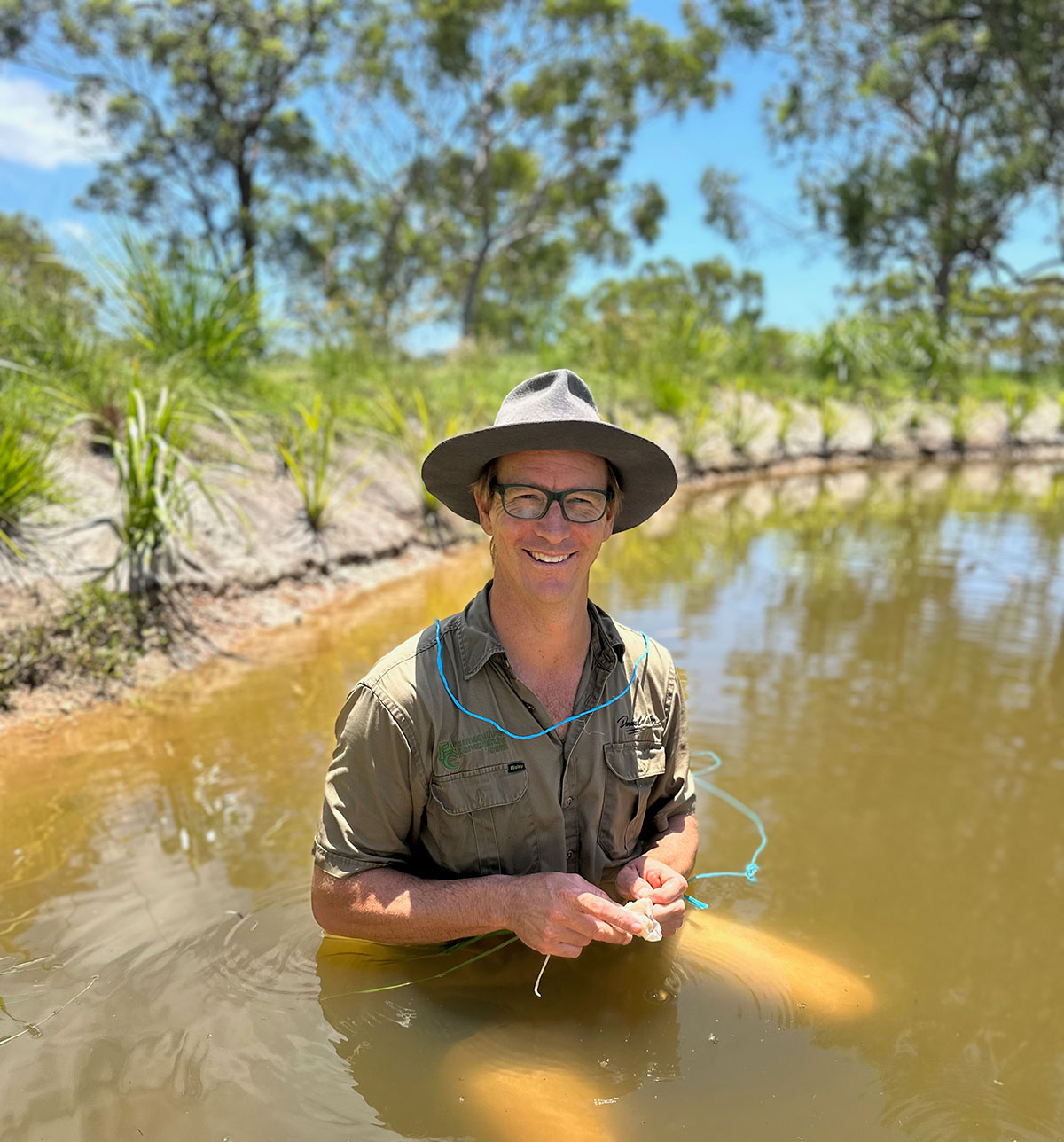
Danial Lawton is an Environmental Engineer, expert earthworks operator, and second-generation permaculturalist. As the son of world-renowned Geoff Lawton permaculture pioneer (founder of Zaytuna Farm), Danial has spent his life at the forefront of regenerative design, bridging the gap between high-level academic engineering and practical, large-scale land transformation.
A Lifetime of Applied Design
His journey began at the age of thirteen with a Permaculture Design Course (PDC) in Tena, Ecuador. Danial followed this early immersion with a Permaculture Diploma specializing in site development, site design, and research, establishing a foundation in the physical execution of permaculture systems.
Technical & Engineering Expertise
To bring a rigorous scientific standard to his earthworks and consultancy, Danial pursued extensive academic qualifications, including:
-
Bachelor of Environmental Science (Double major: Ecology & Conservation Biology; Land & Water Management)
-
Master of Environmental Management
-
Master of Environmental Engineering
From Griffith University
This unique combination of engineering discipline and permaculture intuition allows Danial to solve complex hydrological and geological challenges that standard design often misses.
As a qualified environmental engineer permaculture specialist, Danial (frequently searched as Daniel Lawton) combines science with earthmoving execution.
International Experience & Leadership
With over 25 years in the field, Danial’s portfolio spans international projects across Central and South America. He has held pivotal roles as the Water Systems Manager for Tagari Farm (PRI Australia) and later as the Farm Manager for Zaytuna Farm (PRI Australia), where he oversaw the implementation and maintenance of world-class regenerative infrastructure.
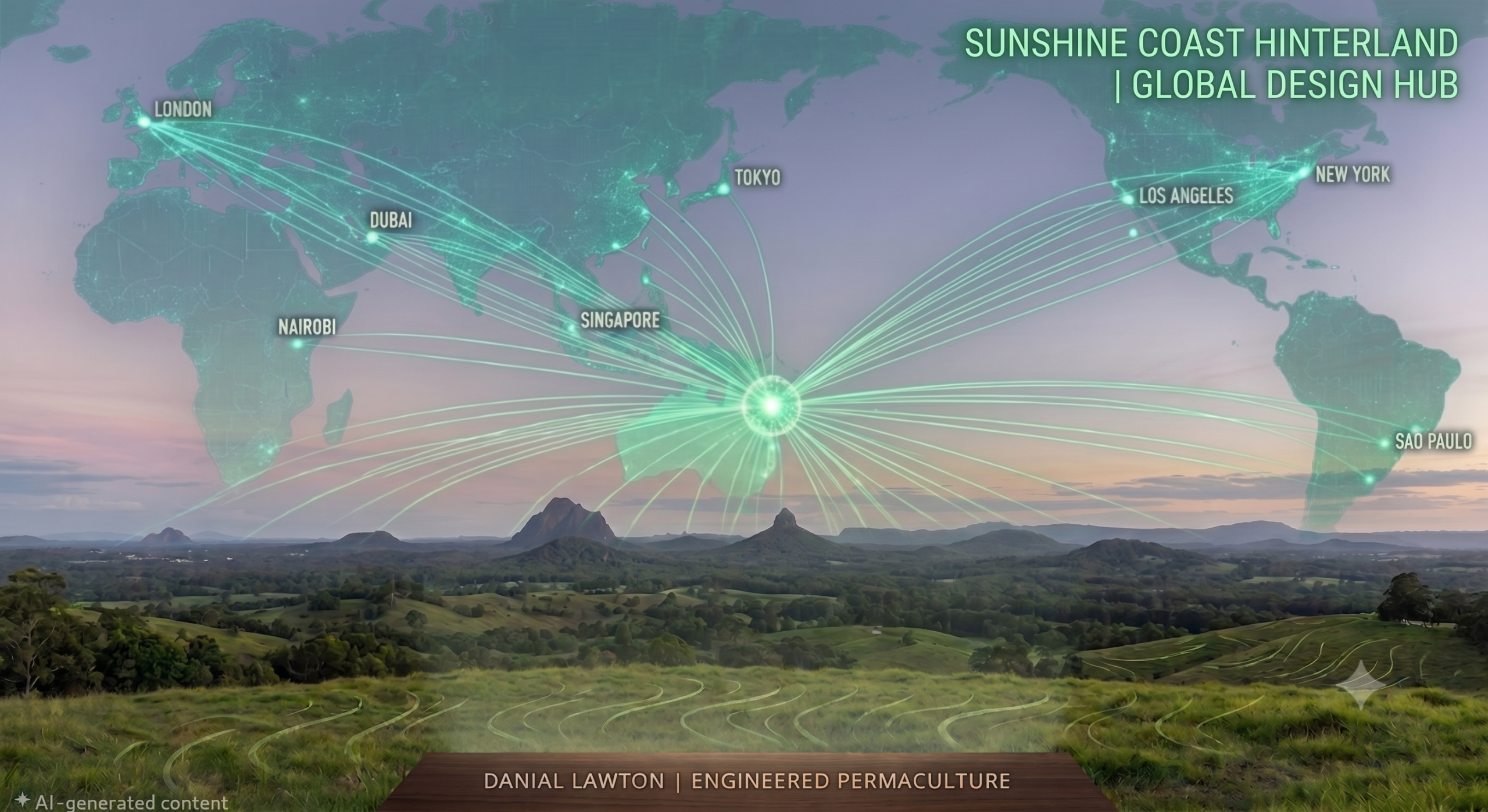
Danial Lawton Permaculture Based on the Sunshine Coast Hinterland, Australia, we leverage satellite intelligence and remote sensing technology to provide world-class permaculture designs to clients across six continents.
Educator & Consultant
A dedicated educator, Danial has facilitated Permaculture Design Courses (PDCs) and hands-on technical workshops like Permaculture earthworks through Griffith University, PRI Australia, Northey Street City Farm, and Noosa Forest Retreat.
Today, Danial Lawton Permaculture operates as a premier permaculture consultant, regenerative engineer and philanthropist. He draws on his deep engineering background to design and execute sustainable systems for local Australian clients, government organizations, and global projects—transforming degraded landscapes into thriving, productive ecosystems through precise earthworks and scientific design.
Why work with an Environmental Engineer for your Permaculture Project? Moving earth and managing water are the most critical—and expensive—parts of any landscape design. Mistakes in hydrology or earthworks can cost thousands to fix. By combining dual-Master’s level engineering with 25+ years of intuitive permaculture experience, I ensure your project is designed right the first time, saving you money, time, and resources in the long term.
Danial Lawton Permaculture & Regenerative Engineering
Growing up immersed in the movement alongside his father Geoff Lawton permaculture pioneer , regenerative land design is second nature to Danial. For many years, Danial worked on and off with the Permaculture Research Institute (PRI), providing hands-on operational support in its foundational early days and across major demonstration sites like Zaytuna Farm.
Recognized internationally as an early registered practitioner on Permaculture Global (Profile #328), Danial has spent decades designing and modeling broadacre systems across six continents.
In addition to serving as a specialized earthmover for his father’s global firm, Permaculture Sustainable Consulting, Danial played a key role in launching Geoff’s original online education platform, Discover Permaculture, helping produce and deliver foundational training to global audiences.
Today, Danial Lawton Permaculture pairs this lifelong field immersion and international project execution with dual Master’s degrees in Environmental Engineering and Environmental Management from Griffith University—bridging authentic permaculture tradition with civil-grade engineering precision.
Testimonial for Danial Lawton Permaculture
Yes. With a Head Office in Brisbane and a Regional Office in Conondale, QLD, Danial leverages Geographic Information Systems (GIS), high-resolution elevation data, and satellite intelligence to provide remote strategy sessions and broadacre masterplans to clients globally across six continents.
Danial consults and designs across all property scales—from high-yield suburban residential footprints and urban micro-climate implementations to multi-hectare broadacre farms, rural homesteads, commercial agriculture, and international eco-developments.
Danial is a second-generation permaculturalist (son of permaculture pioneer Geoff Lawton) who completed his first PDC at age 13 in Ecuador and later managed world-renowned sites like Tagari Farm and Zaytuna Farm. He paired this lifelong immersion with formal degrees: a Bachelor of Environmental Science, a Master of Environmental Management, and a Master of Environmental Engineering from Griffith University. This bridges the gap between high-level academic engineering and practical earthworks execution.
Moving earth and managing water systems are the most expensive—and risk-heavy—parts of property development. Mistakes in hydrology can cost tens of thousands of dollars in erosion control and dam repairs. Combining dual Master’s-level engineering with 20+ years of intuitive permaculture experience ensures your land design is backed by scientific calculations, soil mechanics, and flood-event modeling from day one.